
Union County District Court District 30
Union County is listed by the N.C. Judicial Branch as Prosecutorial District 30, Superior Court District 30, and District Court District 30. District Court is the resolved primary trial-court page for this project because the county is officially listed as District Court District 30 and the target page is the local District Court page. The court sits within North Carolina's unified state court system.
District Court handles misdemeanors, infractions, most traffic matters, juvenile cases, domestic cases, small claims appeals, magistrate-related matters, and other lower-level civil and criminal matters. Superior Court remains essential for felony criminal prosecutions, larger civil cases, jury trials in many categories, and some appeals or transfers from lower trial proceedings. Both divisions use the Clerk of Superior Court for case files and records.
| Court or office | Role | Address | Phone |
|---|---|---|---|
| Union County District Court District 30 | Misdemeanors, infractions, traffic, domestic, juvenile, small claims appeals, magistrate matters | Union County Judicial Center, 400 North Main Street, Monroe, NC 28112 | District Court Judges: (704) 698-3112 |
| Union County Superior Court District 30 | Felony criminal, major civil, jury trials, certain appeals and transfers | Union County Judicial Center, 400 North Main Street, Monroe, NC 28112 | Superior Court Judges: (704) 698-3116 |
| Clerk of Superior Court | Court records, estates, special proceedings, public terminals, copies | Union County Judicial Center, 400 North Main Street, Monroe, NC 28112 | (704) 698-3100 |
| Magistrates | Initial appearances, bond, small claims functions, wedding ceremonies | Magistrate wedding location: 3344 Presson Road, Monroe, NC 28112 | (704) 292-2746 |
Union County District and Superior Split
North Carolina's trial-level work is split between District Court and Superior Court. Union County has no separate county court at law, justice of the peace court, probate court, or municipal court of record for county court-record purposes. Municipal police departments and the Sheriff's Office may issue citations, make arrests, or maintain law-enforcement records, but state criminal and traffic case files route into District or Superior Court and are maintained through the Clerk of Superior Court and eCourts system.
| Function | District Court | Superior Court | Magistrates |
|---|---|---|---|
| Criminal matters | Misdemeanors, infractions, many traffic cases, initial lower-level proceedings | Felony trials and higher-level criminal proceedings | Initial appearances, bond and pretrial release issues |
| Civil matters | Domestic, juvenile, small claims appeals, lower-level civil functions | Larger civil cases, jury trials, certain appeals and transfers | Small claims and summary ejectment first-stage functions |
| Records custodian | Clerk of Superior Court for court-file records in Union County | ||
| Probate | Estates and many special proceedings are handled through the Clerk of Superior Court, not a separate probate court. | ||
Note: A police citation or sheriff arrest can become a court case, but the law-enforcement record and the court case file are different records.
Union County Court Case Flow
Case flow depends on the charge or claim. A lower-level criminal matter may start with a citation, arrest, warrant, or summons, then move through magistrate and District Court processes. A felony may involve District Court first appearances before moving into Superior Court for indictment, plea, trial, or sentencing. Civil and family cases begin with filings and service, then hearings, mediation or other case management, orders, and possible appeal.
Criminal flow: Citation or arrest › magistrate or first appearance › District Court setting › plea, hearing, dismissal, transfer, or trial › disposition › appeal or Superior Court action where applicable.
Civil and family flow: Filing › service › response › hearing, mediation, arbitration, or setting › order or judgment › appeal or enforcement.
Use Union County court records for broader case-file search steps when the goal is a complete file rather than a single District Court overview.
Union County District Court Traffic
Traffic violations in Union County are North Carolina state court matters handled through District Court or Superior Court workflows depending on the charge type. The N.C. traffic violations help topic says whether an offense is a crime or infraction depends on the statute violated, and one quick clue is the case number on the citation, ticket, warrant, or charging document. The case number begins with the last two digits of the year charged.
Union County court dates can be searched through Portal by name, citation number, county, and more. Payment Information says eligible citation payments by mail may be made by money order or certified check only, payable to Union County Clerk of Superior Court. No cash and no personal checks are accepted by mail. In-person payment at the Cashier's Office accepts cash, credit or debit card with processing fees, money order, and certified check, but no personal checks.
Union County Family and Small Claims
District Court handles domestic and juvenile matters, and Union County publishes many local rules and forms tied to family court. The research lists domestic cover sheets, financial affidavits, child custody pro se packets, family court requests for setting, custody mediation forms, equitable distribution pretrial materials, motions to continue, notices of hearing, interpreter and Zoom custody mediation notices, and related forms.
Small claims and summary ejectment matters also connect to District Court and magistrate functions. The Sheriff's Civil Bureau page explains a Clerk-to-Sheriff workflow for evictions: landlords file summary ejectment at the Clerk of Superior Court, and after a judge rules for the landlord and ten days pass, the landlord may return to the clerk for a Writ of Possession that is sent to the Sheriff for execution. That process shows how District Court, the clerk, magistrate functions, and the Sheriff's Office can all touch one local case path.
Union County District Court Magistrates
Magistrates are judicial officers within North Carolina District Court functions. In Union County, magistrates handle initial appearances, bond and pretrial release matters, small claims functions, summary ejectment first stages, and marriage ceremonies. The contact directory lists Magistrates at (704) 292-2746.
Marriage ceremonies by magistrate are a distinct local detail. The Union County Judicial Branch page says weddings are by appointment only Monday, Tuesday, Thursday, and Friday at 10:00 a.m., 11:00 a.m., 3:00 p.m., and 5:00 p.m. at the Union County Magistrates Office, 3344 Presson Road, Monroe, NC 28112. That location is identified as the Union County Jail location, not the Register of Deeds office or the main courthouse counter.
Union County Treatment Courts
Union County publishes DWI Treatment Court, Family Treatment Court, and Veterans Treatment Court as alternatives to traditional sentencing for eligible people with substance use or mental health needs. The programs use supervised treatment plans, coordinated support, accountability, evidence-based treatment, and recovery goals. General treatment-court inquiries route to the program contacts listed by the county, and the court directory lists Drug Courts at (704) 698-3235.
The Union County treatment courts source supports the local DWI, Family, and Veterans Treatment Court details from an official Union County page.
Union County DWI Treatment Court has a notable limit: the research says DWI charges cannot be dismissed or expunged through successful program completion, though other benefits may occur. That caveat is important for people reading District Court records because program participation is not the same as erasing a case.
Union County District Court and Federal Court
Union County District Court is a North Carolina state court. Federal cases arising in Union County do not begin as county District Court records. They begin in, or are removed to, the U.S. District Court for the Western District of North Carolina, Charlotte Division. The federal system uses its own clerk, case numbers, and PACER access.
The Western District of North Carolina source is assigned to the District Court page.
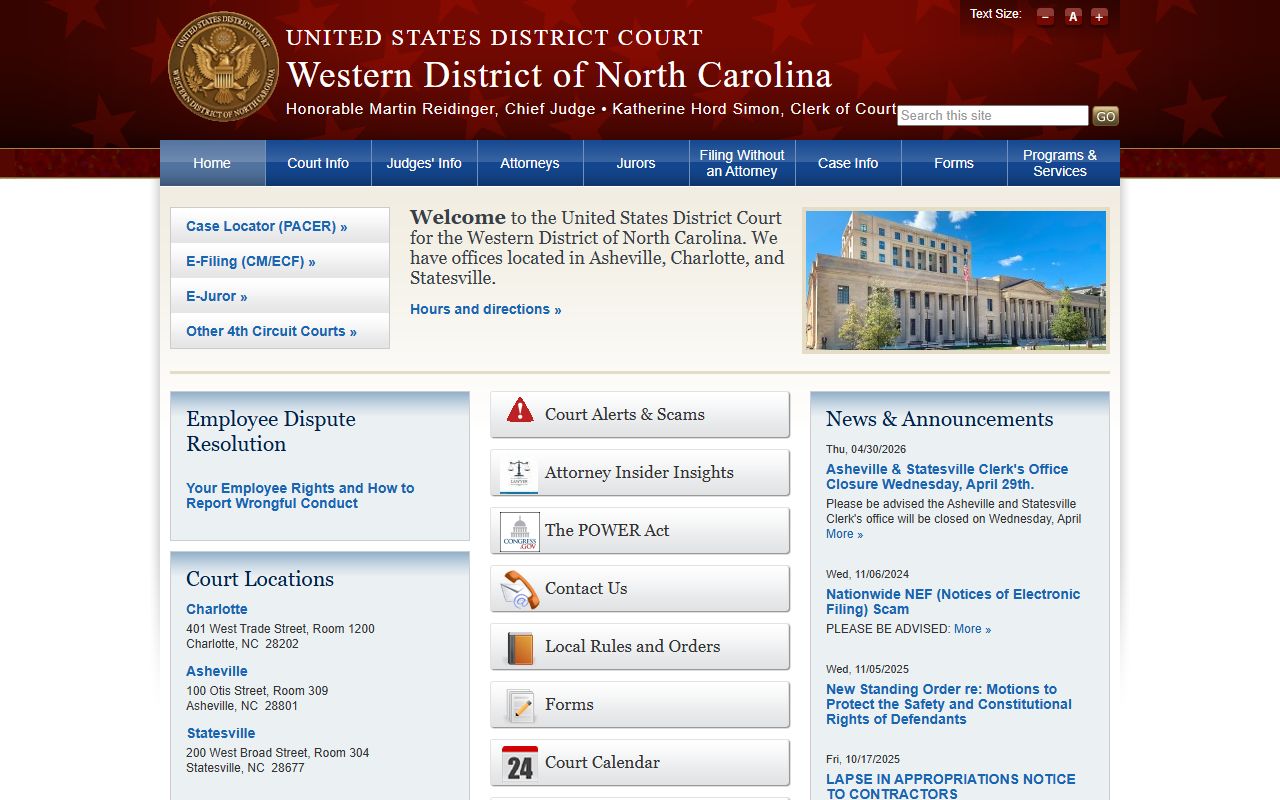
This federal court source helps distinguish Union County state District Court records from federal district court records.
The Western District jurisdiction source is assigned to the District Court page.
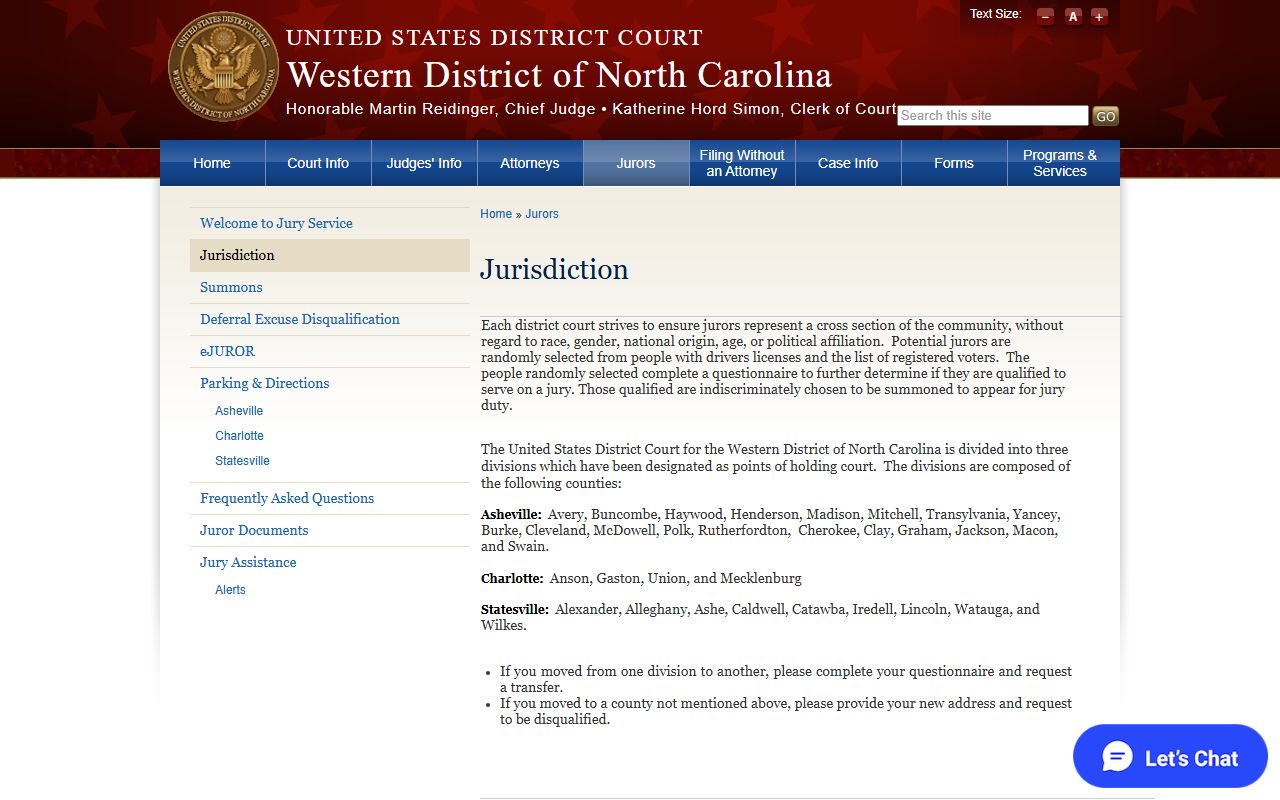
The jurisdiction source confirms Union County's federal context without changing the state District Court route for local cases.
Union County Federal Record Access
The Charlotte Division source is assigned to the District Court page.
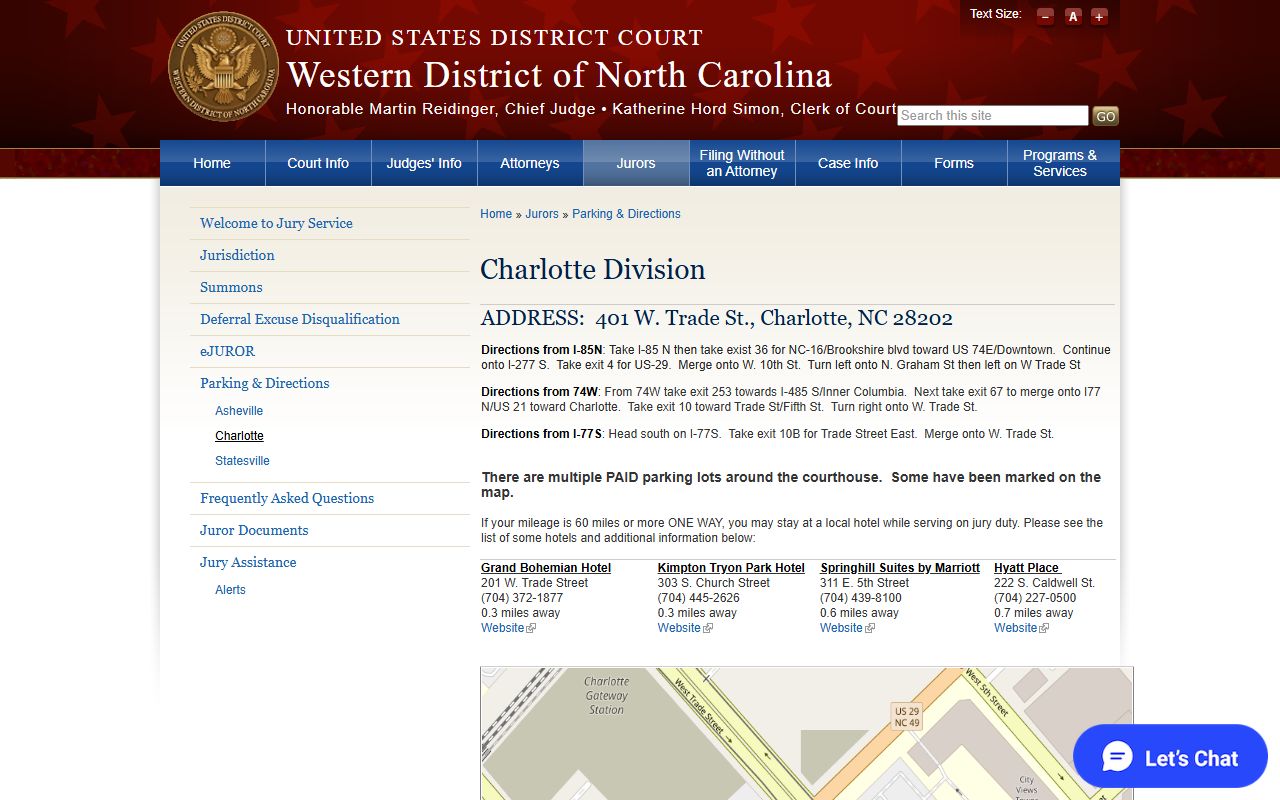
The Charlotte Division source gives the federal venue context for Union County matters that are not state District Court files.
The PACER district court lookup source is assigned to the District Court page.
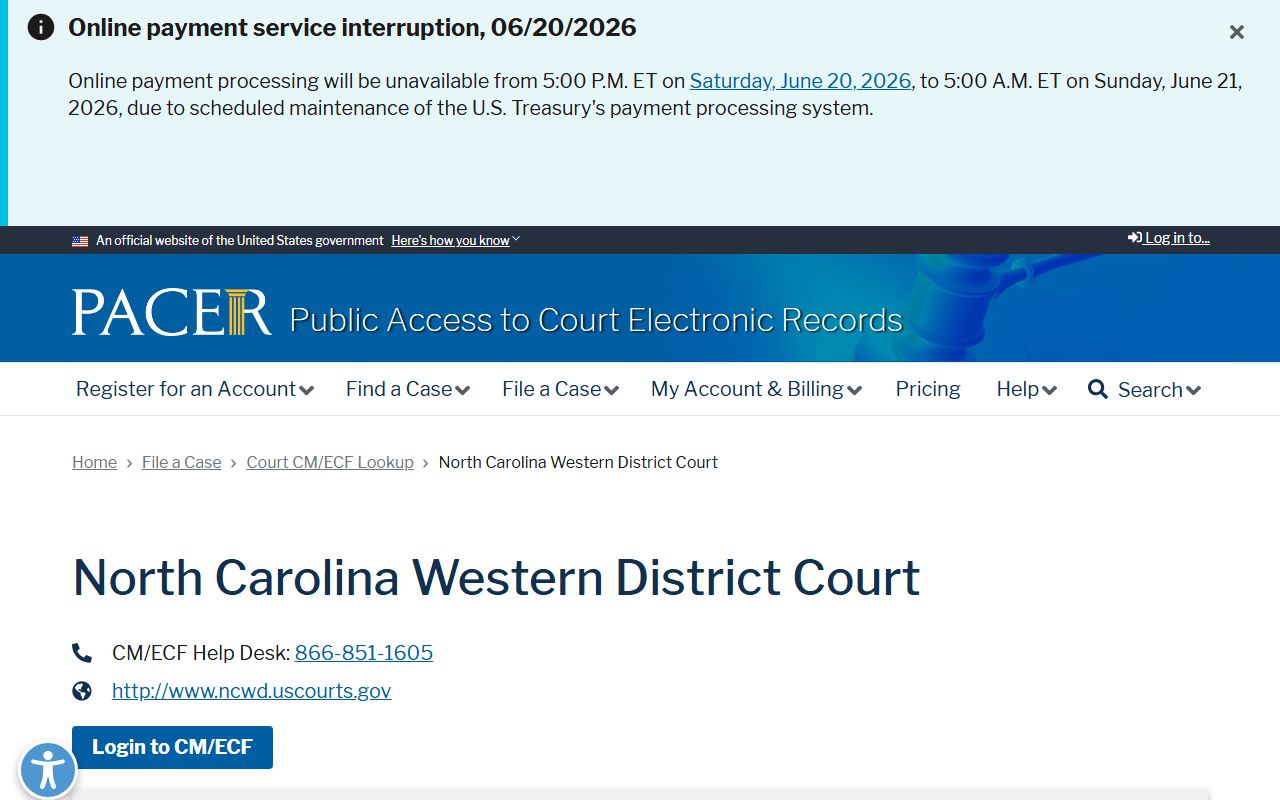
PACER is the federal lookup route, while Union County District Court records use eCourts, public terminals, and the Clerk of Superior Court.
The federal district statute source is assigned to the District Court page.
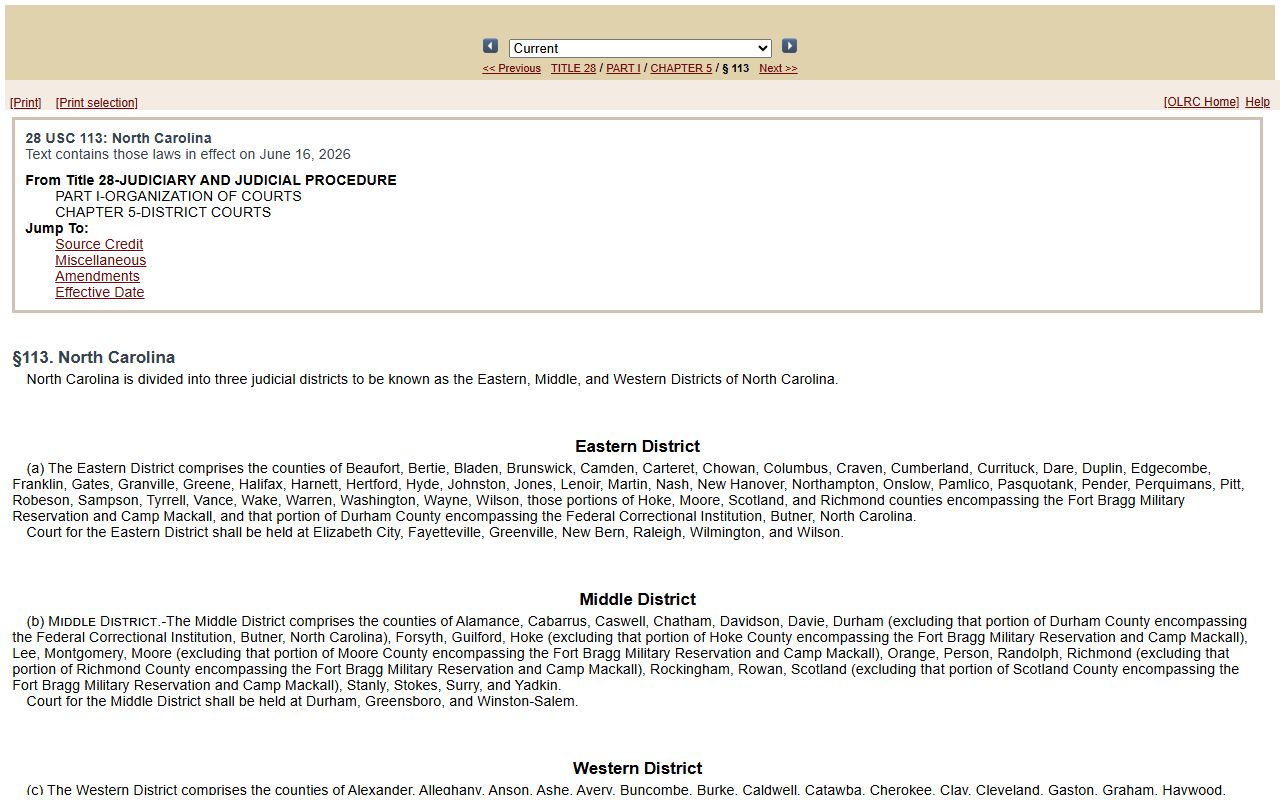
The statute source supports the federal geography only; it does not replace the Union County District Court search path for state matters.
Access Union County District Court Records
Use eCourts Portal Smart Search for case information, Search Hearings for court dates, and NC Judgment Search for judgment index records. Filter to Union County where the system allows it. Use the Clerk of Superior Court for paper files, public terminal help, certified copies, divorce judgments, estates, and older or non-digitized records. Use the District Attorney for prosecution questions about eligible traffic tickets or criminal charges, and use the magistrate contact for initial appearance or bond questions after an arrest.
For a full criminal case file, use Union County criminal court records after identifying whether the matter stayed in District Court, moved to Superior Court, or involved both divisions. For custody, divorce, or domestic case copies, the Clerk of Superior Court remains the custodian, while some juvenile and protected records may be restricted.