
How to Search Union County Court Records
The main online access point is the North Carolina eCourts Portal Smart Search. It is statewide, so Union County users should filter by location when the search form allows it. Smart Search can be used for public case information, while the Portal home also links to Search Hearings, Make Payments, and NC Judgment Search. The N.C. Judicial Branch Portal training page says Smart Search supports advanced filtering for Civil Actions, Special Proceedings, nonconfidential Estates, and Criminal Actions under the court-record categories in G.S. 7A-109.
Before searching Union County court records, collect the case number if known, the party name in last-name-first format, the approximate filing date, and the case type. Portal is not the only route. The Judicial Branch court-record help topic says public self-service terminals at clerk offices can search criminal information by defendant name, case number, or victim and witness name. Paper files must be reviewed in the county where the case is located, so Union County paper files route to the Clerk of Superior Court in Monroe.
- Open Smart Search from eCourts Portal or from the official Union County court page.
- Enter a record number, or enter a party name in Last, First Middle Suffix format.
- Expand advanced filters and choose Union County under location when that option appears.
- Use case type, status, filing-date range, and party identifiers only when the details are reliable.
- Use Search Hearings for date, time, courtroom, attorney, or judicial officer questions.
- Use NC Judgment Search for judgment index entries, then move back to Smart Search for fuller case summaries.
- For certified copies, older files, or non-digitized documents, contact the Clerk of Superior Court.
The Remote Public Access program is a separate licensed channel for statewide criminal and civil information. Research notes list a non-refundable connection fee, an added user ID fee, and per-transaction charges. That program is different from free public Portal searching and is usually aimed at users who need high-volume or professional access.
Union County Court Records Search Fields
The Portal search form rewards precise entries. Wildcards are allowed, but the training page gives minimum character rules. A case-number wildcard needs at least four characters. A business or nickname wildcard uses at least four characters followed by an asterisk. A person-name wildcard uses at least three last-name characters and at least one first-name character followed by asterisks.
| Field Label | Type | Required | Notes / Format |
|---|---|---|---|
| Record Number or Name | Text | Required if no advanced party fields are used | Use a record number or Last, First Middle Suffix format. |
| Last Name | Text | Required for name search | Wildcard searches need at least three characters plus an asterisk. |
| First Name | Text | Required for name search | Wildcard searches need at least one character plus an asterisk. |
| Middle Name and Suffix | Text / dropdown | Optional | Useful when common names return too many Union County court records. |
| Filter by Location | Dropdown | Optional but important | Choose Union County instead of searching all North Carolina locations. |
| Party Search Criteria | Filters | Optional | Date of birth, gender, ethnicity, phone, FBI number, SO number, and booking number may narrow results. |
| Case Search Criteria | Filters | Optional | Case type, case status, file date start, and file date end help separate old and active files. |
The official Portal training resources show how Smart Search, Search Hearings, and NC Judgment Search fit together. Use them as different tools, not as one single search box.
The manifest image for Portal training and resources shows the official source for search guidance.
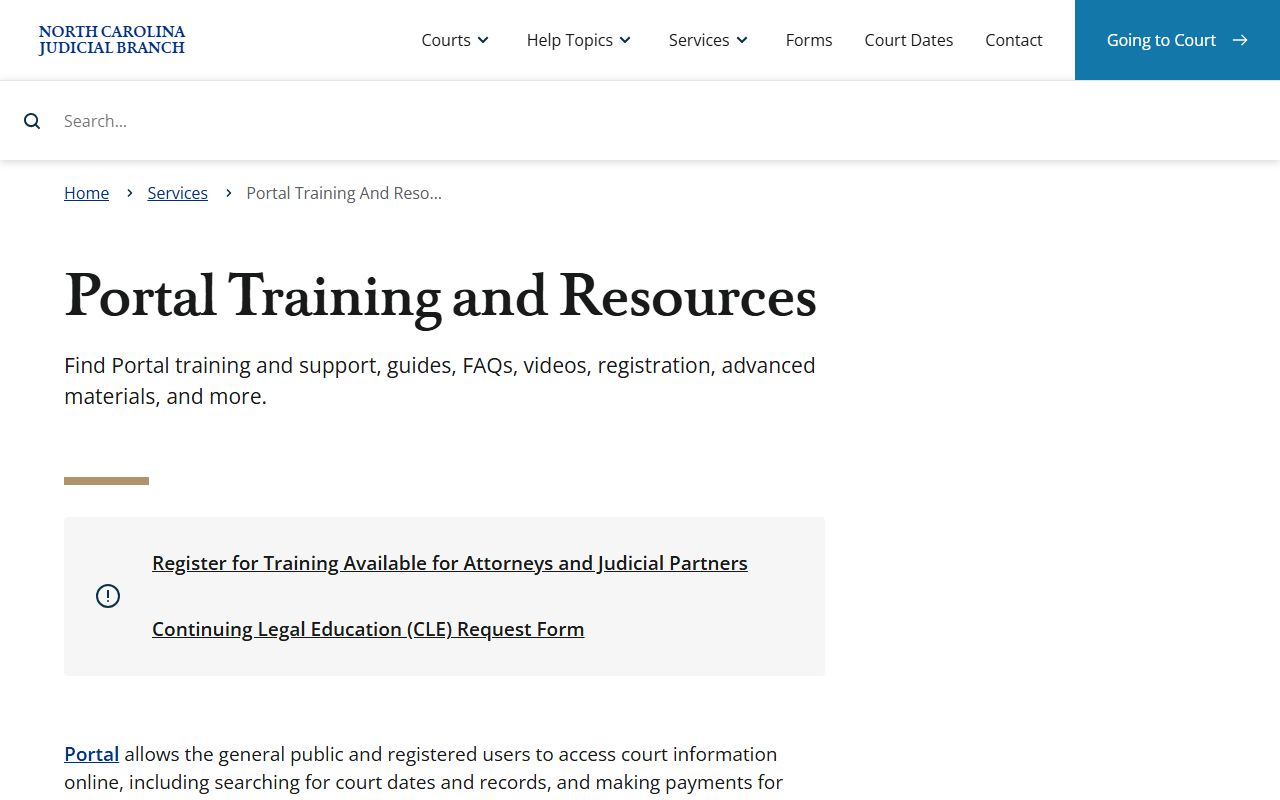
That source matters because Portal behavior, browser support, CAPTCHA timing, and wildcard rules can affect whether a Union County court records search returns the right case.
Types of Union County Court Records
Union County court records are not held by a county-run court system. North Carolina uses a unified state court system, and the Clerk of Superior Court keeps files for both Superior Court and District Court matters in the county. The N.C. Judicial Branch Union County page lists Union County in Prosecutorial District 30, Superior Court District 30, and District Court District 30.
Several record groups are easy to confuse. Divorce judgments are court records kept by the clerk, while marriage licenses and certificates are Register of Deeds records. Probate, estates, guardianships, and many special proceedings route through the Clerk of Superior Court rather than a separate probate court. Sheriff P2C arrest, inmate, and wanted-list records are law-enforcement records and do not replace the court case file.
- Criminal records: misdemeanor, felony, infraction, traffic-criminal, probation violation, bond, plea, judgment, sentence, and disposition entries.
- Civil records: lawsuits, small claims, summary ejectment, domestic civil filings, money judgments, liens, and related orders.
- Family records: divorce, custody, child support, equitable distribution, domestic violence protective orders, and family-court forms.
- Estates and special proceedings: wills, probate administration, guardianship, partitions, foreclosures, and other clerk-supervised matters.
- Traffic records: citations, infractions, payments, hearings, and related court outcomes, separate from state driver records.
For users who need a broader county record, the Register of Deeds and Sheriff's Office may be relevant, but they answer different questions. The court file is the source for filed pleadings, docket events, court orders, and judgments.
What Union County Court Records Show
A Union County court record can be brief or detailed. Online case summaries may show only the searchable case shell, party names, filing date, case status, and some events. A paper file at the clerk's office can include pleadings, motions, orders, judgments, notices, service returns, financial obligations, bond papers, probation orders, courtroom minutes, and document copies not exposed in a public search result.
| Field | What It Shows |
|---|---|
| Case Number | The unique court identifier used in Portal, clerk terminals, copy requests, and hearing searches. |
| Filing Date | When the case or document was opened or filed with the court. |
| Parties | Names of plaintiffs, defendants, petitioners, respondents, attorneys, or other case participants. |
| Case Type and Status | The category of case and whether it is active, disposed, pending, or otherwise marked in the system. |
| Events and Hearings | Docket entries, hearing dates, courtroom information, continuances, orders, and scheduled court activity. |
| Disposition or Judgment | The outcome, judgment index information, sentence, dismissal, or other final court action when public. |
The Remote Public Access program page is one documented option for users who need broader statewide civil and criminal access.
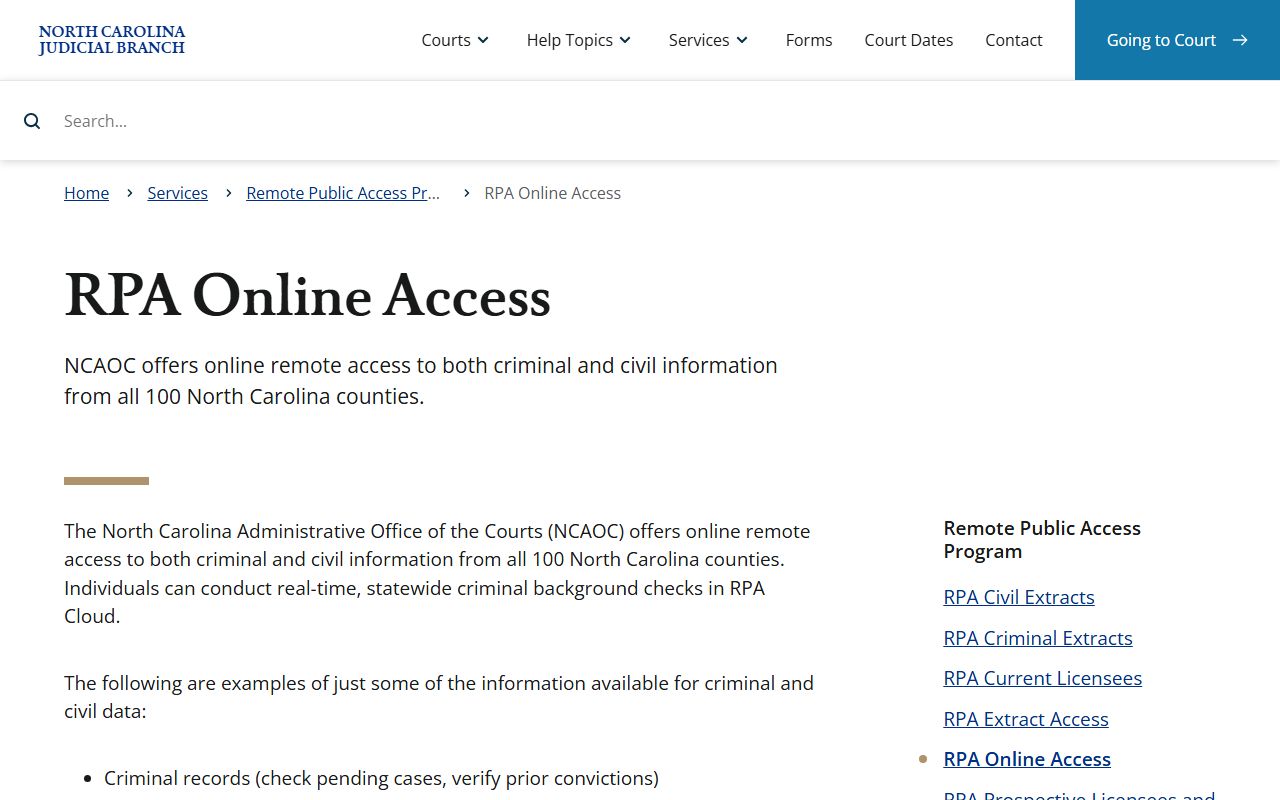
Remote access is useful for recurring research, but the Clerk of Superior Court remains the county point for paper files and certified court-record copies.
Public Access for Union County Court Records
North Carolina court-record access starts with G.S. 7A-109, which directs clerks to maintain records, files, dockets, and indexes and makes them open for public inspection during regular office hours unless a law says otherwise. G.S. 132-1 defines public records broadly for public business records, and G.S. 132-6 addresses inspection and copies upon payment of lawful fees.
Those laws do not mean every document is online. Court documents are requested from the clerk in the county of filing, not through the general county public-record portal. Judicial Branch administrative records can use the request a public record service, while Union County executive branch records use the county's public-communications request channel. For Union County court records, case documents, divorce judgments, estates files, and certified copies route to the Clerk of Superior Court.
Note: Public access means inspection unless restricted by law; certified copies and document retrieval may still require clerk fees.
The court costs hub links to current charts for civil, criminal, estates, special proceedings, and miscellaneous court costs.
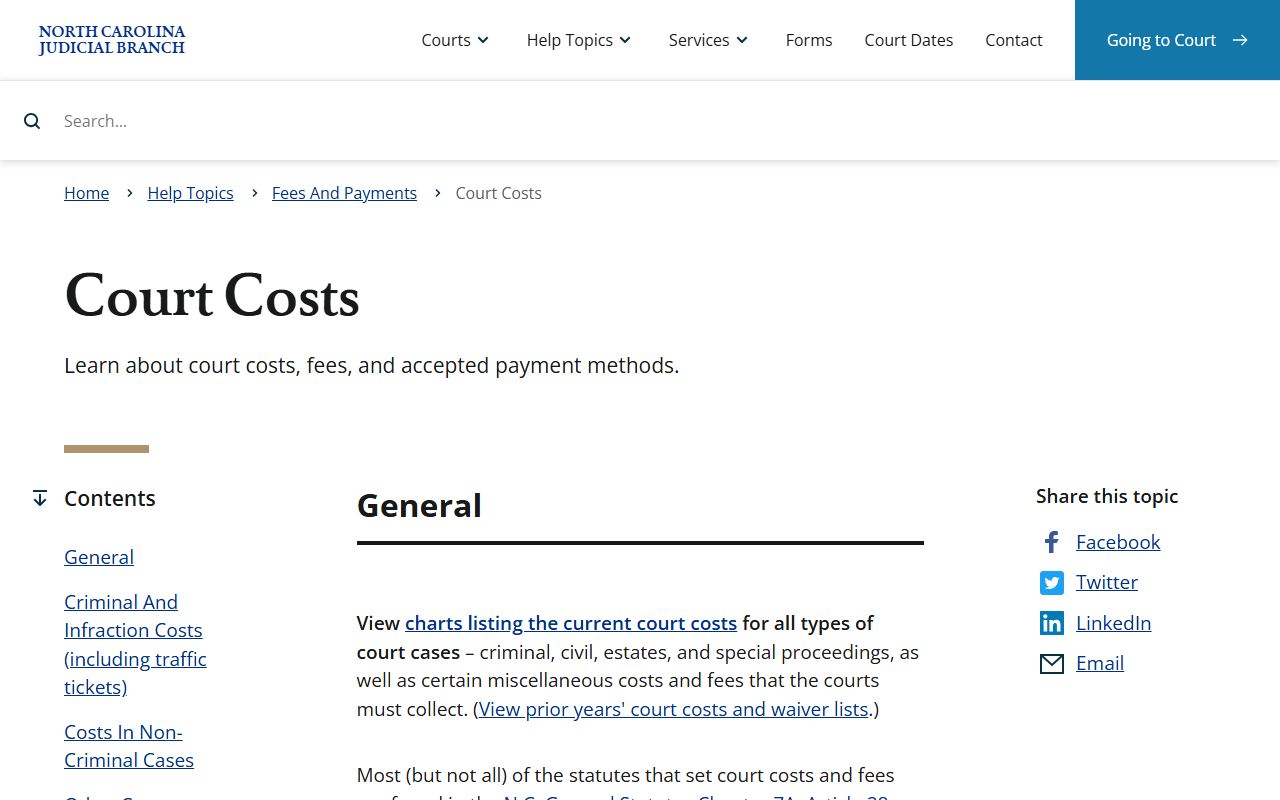
Use the current cost chart or clerk confirmation before mailing payment, because copied records and certifications depend on the type of court document requested.
Restricted Union County Court Records
Some Union County court records are not ordinary public files. Juvenile records are governed by G.S. 7B-3000 and should be treated as confidential unless a statute or court order allows access. Adoption matters, mental health proceedings, sealed filings, protected addresses, minor information, Social Security numbers, financial account numbers, and victim information may be restricted or redacted.
Criminal investigation and intelligence records have separate limits under G.S. 132-1.4. Public P2C entries may show arrests, wanted-list information, or daily bulletin events, but that does not make investigative reports, witness statements, body camera footage, or sealed warrant material available through court-record search. Law-enforcement recordings have their own disclosure process under G.S. 132-1.4A.
The Judicial Branch public-record request service is for administrative records rather than copies from the court case file.
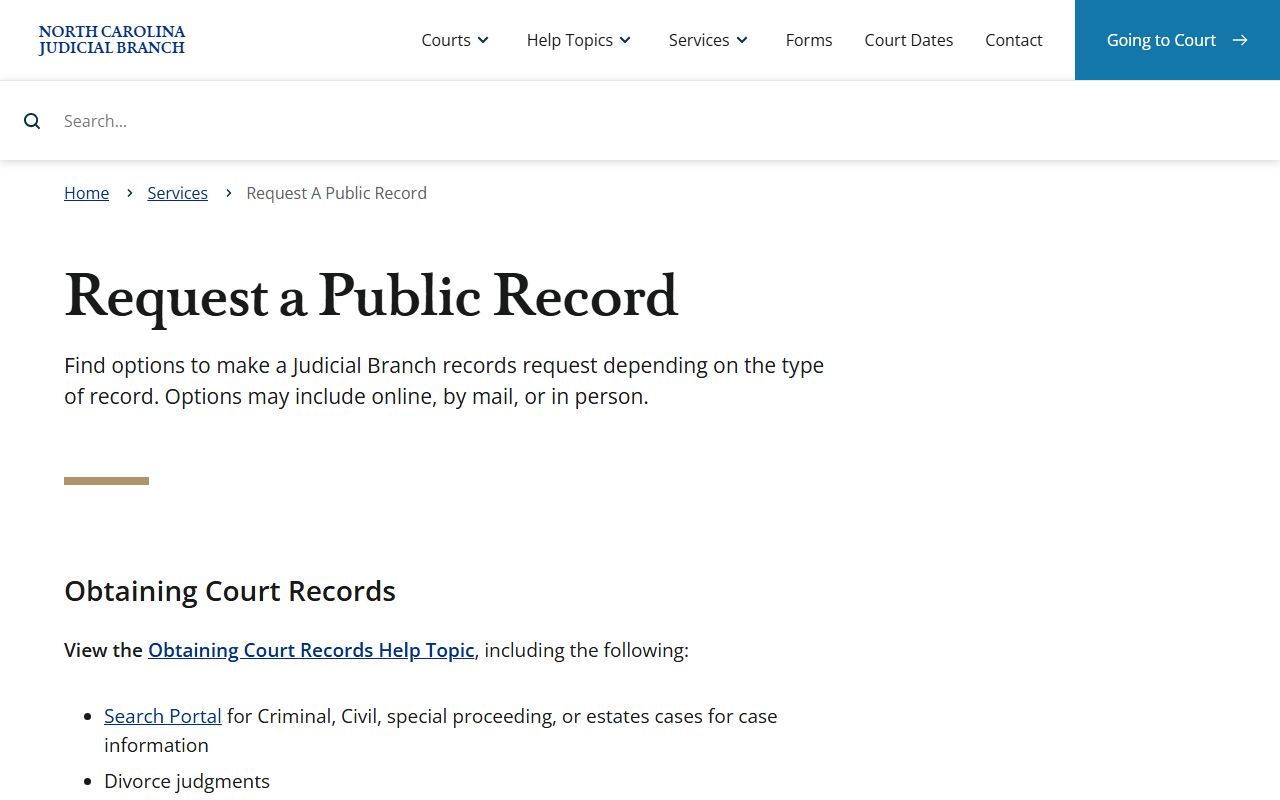
For case-file copies, use the clerk route instead of sending a broad administrative public-record request.
In-Person Union County Court Record Requests
The in-person route is still important for Union County court records. The clerk's office is the place to review paper case files from Union County, ask about certified copies, use public self-service terminals, request divorce judgments from Union County cases, and clarify older or incomplete online entries. Users should bring the case number if known, the names of the parties, the case type, and a clear copy request.
Clerk of Superior Court
Union County Judicial Center
400 North Main Street
Monroe, NC 28112
(704) 698-3100
Monday-Friday, 8:30 a.m.-5:00 p.m.
The Judicial Branch public records request guidance says copies of court documents should be requested from the clerk in the county where the case was filed.
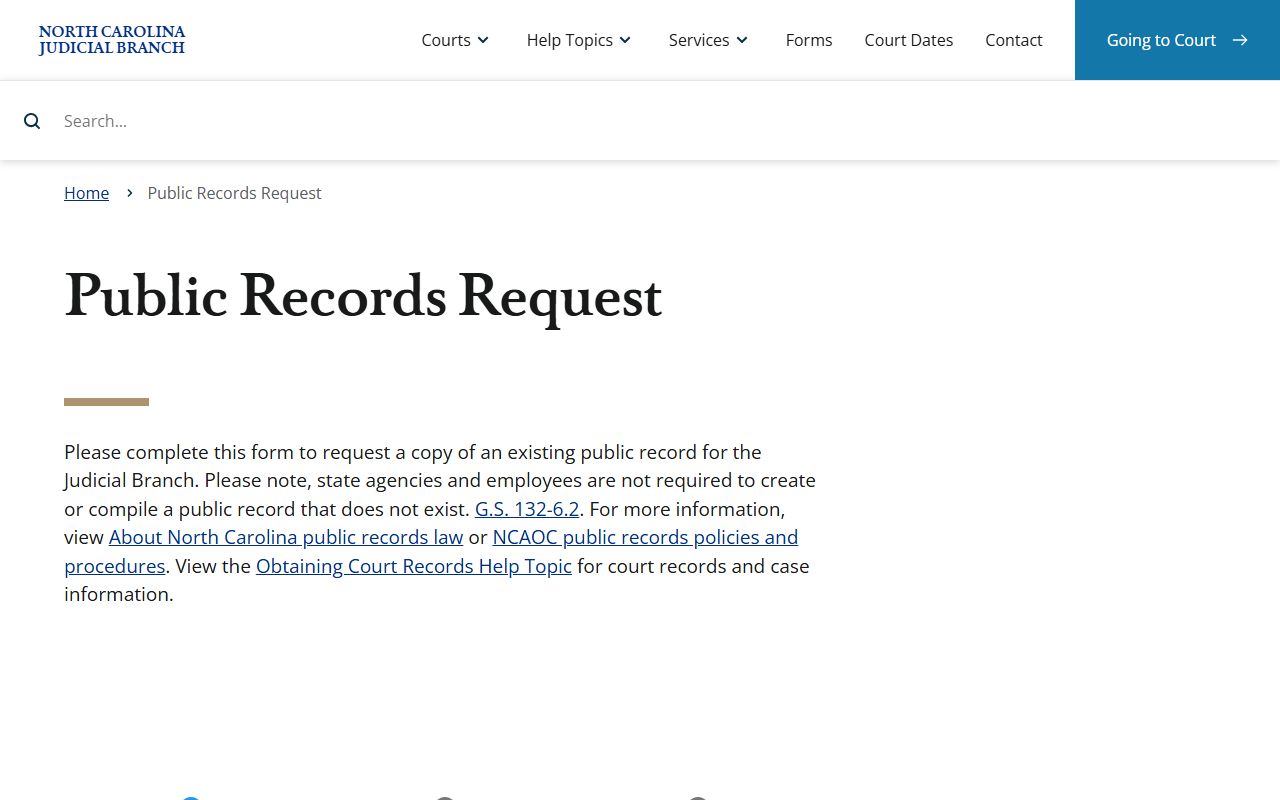
That distinction keeps a Union County court records request pointed to the case custodian instead of a statewide administrative office.
The source for court record keeping and public inspection is the statute that frames the clerk's records role.
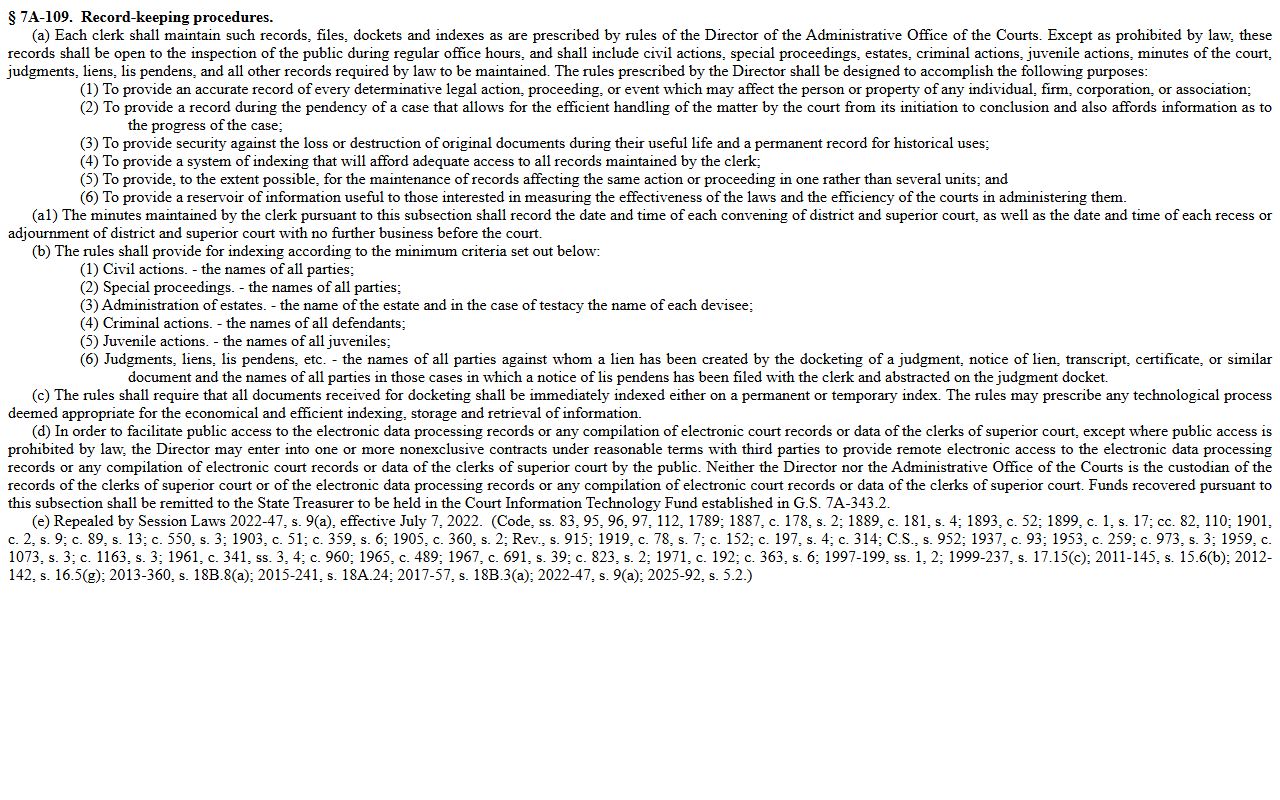
That statutory source supports the practical rule: search online when possible, but use the Union County clerk for the official case file and copies.